
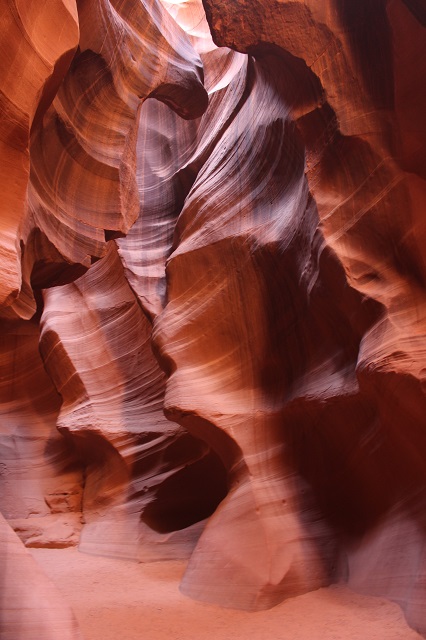
The Grand Circle is widely regarded as one of the most breathtaking regions in the world, spanning the heart of the American Southwest. It boasts America’s densest concentration of national parks across five states: Arizona, New Mexico, Colorado, Utah, and Nevada. Spectacular red rock canyons, vast deserts, rugged plateaus, and dramatic river valleys are connected by designated Scenic Byways – offering postcard vistas right out of your car window.
My partner and I had two weeks to explore this extraordinary landscape. To make the most of our time without spending all day driving, we focused our route on Nevada, Utah, and Arizona. Over 14 days, we explored six world-renowned national parks, multiple state parks, and iconic tribal landmarks like Monument Valley and Antelope Canyon.
Las Vegas – The City That Never Sleeps
Our journey began with a flight from Frankfurt via San Francisco into Las Vegas, Nevada. Everything ran on schedule, and we landed at McCarran International Airport in the evening. A short taxi ride brought us to our first base, the Howard Johnson Tropicana. It was a comfortable mid-range motel just five minutes on foot from the Las Vegas Strip – ideal for a couple of days exploring the city without spending a fortune.
The next morning started with breakfast at Coco’s Bakery. American breakfast portions are famously generous – one plate was easily enough for both of us to share.
From there, we walked south towards the legendary “Welcome to Fabulous Las Vegas Nevada” sign. It’s located at the southern tip of the Strip, across from the Harley-Davidson dealership, and naturally had a steady line of travelers taking photos.
We then spent the rest of the day strolling north along the Strip: past Mandalay Bay, Luxor, Excalibur, MGM Grand, New York-New York, Bellagio, Caesars Palace, and Paris Las Vegas.
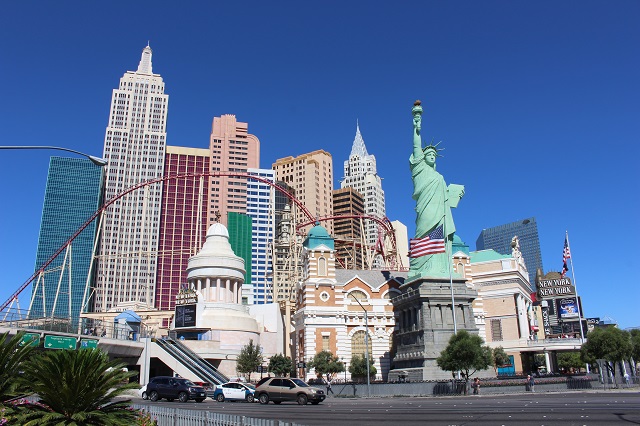
Every resort on the Strip is built around an elaborate theme, with spectacular lobby architecture, air-conditioned casino floors, and no clocks anywhere in sight. By the end of our first full day on foot, we had tracked more than 13 kilometers (8 miles), though the Deuce bus also runs frequently along the boulevard if you want to give your feet a rest.
Renting an SUV for the Southwest
The following morning we picked up our rental car at the airport car rental center. We originally booked a midsize sedan through Alamo. However, adding a second driver would have incurred a daily fee. The counter agent suggested upgrading to a full-size SUV where the additional driver was included free of charge. For just $13 more in total, we drove off in a fully equipped Ford Explorer. The extra ground clearance, spacious cargo area, and comfortable ride proved to be worth every penny over the next two thousand miles.
Shortly after leaving Nevada, we crossed into Utah and adjusted our watches forward by one hour to Mountain Standard Time.
Zion National Park: Towering Cliffs & The Narrows
Our first national park destination was Zion, roughly 2.5 hours northeast of Las Vegas. Private vehicles must be parked at the visitor center during peak season, as the scenic canyon drive is served exclusively by free park shuttle buses. We hopped on and off along the scenic route, stopping at the most scenic viewpoints and taking the short hike to Weeping Rock. While our initial dream of hiking Angels Landing had to be postponed due to trail conditions, wading into The Narrows was an absolute highlight – we even spotted elk grazing near the Virgin River.
We spent the night at the Quality Inn Zion in Hurricane, approximately 30 minutes outside the park entrance.
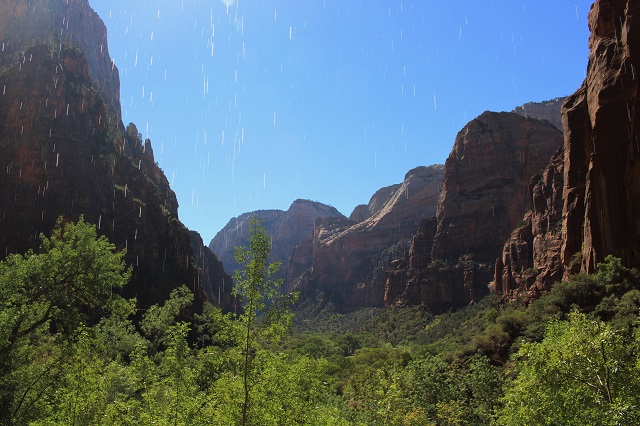
The next morning we returned to Zion early for sunrise photo stops before continuing towards Bryce Canyon. The drive passes through the historic Zion-Mount Carmel Tunnel (controlled by traffic lights for alternating single-lane traffic). Directly after exiting the tunnel, there are a few very limited parking spots for the Canyon Overlook Trail – make sure to arrive early if you want to catch this spectacular viewpoint!
Bryce Canyon National Park: Sunrise Over the Hoodoos
Bryce Canyon City is just a two-hour drive from Zion, taking you past the striking Red Canyon with its natural stone arches. We stayed at the Best Western Plus Ruby’s Inn. In the late afternoon, we drove the 18-mile park road all the way to Rainbow Point at the southern end. Bryce Canyon isn’t technically a canyon carved by a river; it’s a giant natural amphitheater shaped by frost weathering and rainwater erosion over millions of years, creating thousands of delicate rock pillars known as hoodoos.
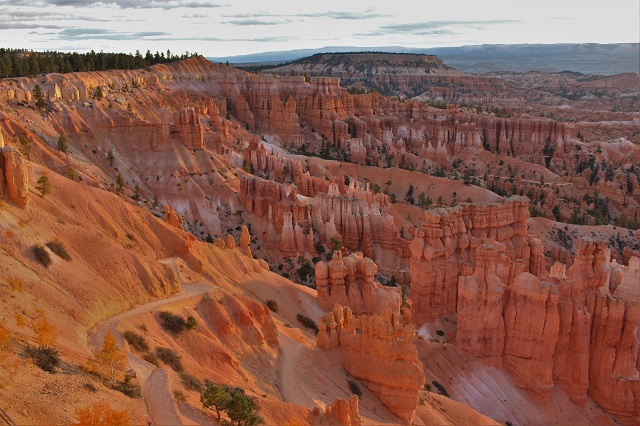
While sunset from Sunset Point casts the amphitheater in deep shadow, sunrise is an unforgettable spectacle. As the morning sun broke over the horizon, the hoodoos lit up in glowing hues of crimson, amber, and gold. Following sunrise, we tackled a 10 km (6-mile) combined hike: from Sunrise Point down through Queen’s Garden, connecting into the Navajo Loop, Peekaboo Loop Trail, and back up through the dramatic switchbacks of Wall Street. Climbing Wall Street rather than descending it is safer and far easier on the knees. Keep an eye out for cute chipmunks along the path, but keep a respectful distance from wildlife.
Capitol Reef National Park: Utah’s Hidden Treasure
From Bryce, we headed roughly two hours east along Highway 12 to Torrey, base camp for Capitol Reef National Park, staying at the Red Sands Hotel. Capitol Reef is often overlooked compared to Zion or Bryce, but its sheer rock folds, Chimney Rock, Goosenecks Overlook, and ancient Fremont petroglyphs make it feel like an untamed red reef rising out of the desert.
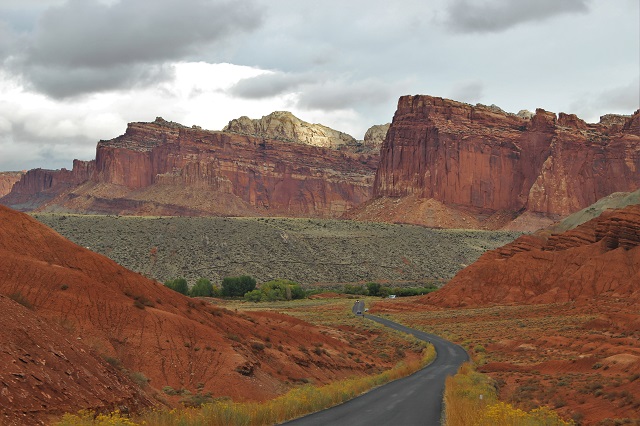
After driving the scenic park road, a scenic 2.75-hour drive took us onward to Moab, where we based ourselves for three nights at the Riverside Inn to explore Canyonlands and Arches.
Dead Horse Point State Park & Canyonlands
Perched 2,000 feet above the Colorado River, Dead Horse Point State Park (45 minutes from Moab) offers one of the most staggering vistas in North America. The overlook at the end of the road showcases a dramatic goose-neck meander carved deep into the sandstone.
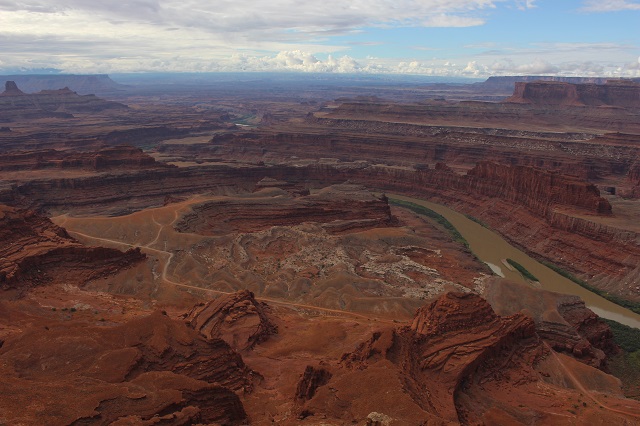
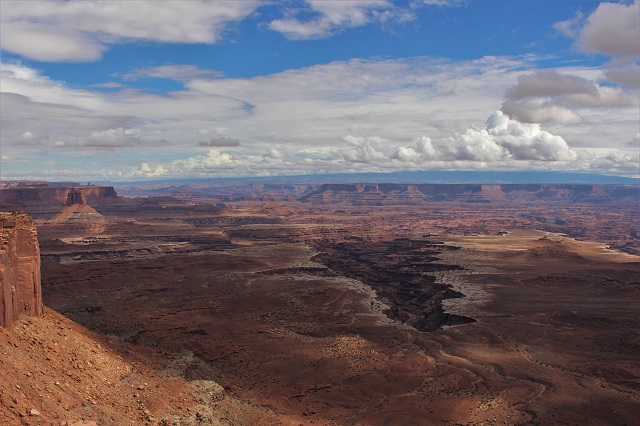
From there, we drove into the Island in the Sky district of Canyonlands National Park. The premier photo spot here is Mesa Arch – a natural stone arch perched right on the rim of a sheer cliff. We also explored Buck Canyon Overlook, Grand View Point, and Green River Overlook, each offering endless panoramas across the canyon country.
Arches National Park: Nature’s Stone Sculptures
Arches National Park contains more than 2,000 documented natural sandstone arches. We started with Courthouse Towers, Balanced Rock, and Sand Dune Arch, marveling at the rich contrast between deep blue desert skies and glowing red rock fins. In the Devils Garden area, we embarked on an adventurous trail hike out to Double O Arch, traversing narrow sandstone fins and sandy desert tracks.
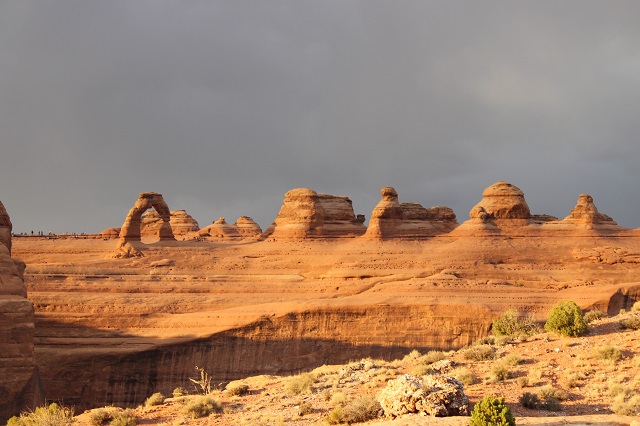
For sunset, we drove to the Delicate Arch Viewpoint. While the strenuous 3-mile trail to the base of Delicate Arch wasn’t feasible due to sudden thunderstorm activity, viewing the world’s most famous natural arch through a telephoto lens in the evening light was pure magic.
Monument Valley Navajo Tribal Park
Leaving Moab behind, we crossed into the Navajo Nation and approached iconic Monument Valley. Everyone knows the famous cinematic view along Highway 163 coming down from Mexican Hat – the endless straight road leading directly towards towering red mesas and buttes. Driving the 17-mile unpaved Valley Drive in our Ford Explorer allowed us to get right up to the sandstone giants.
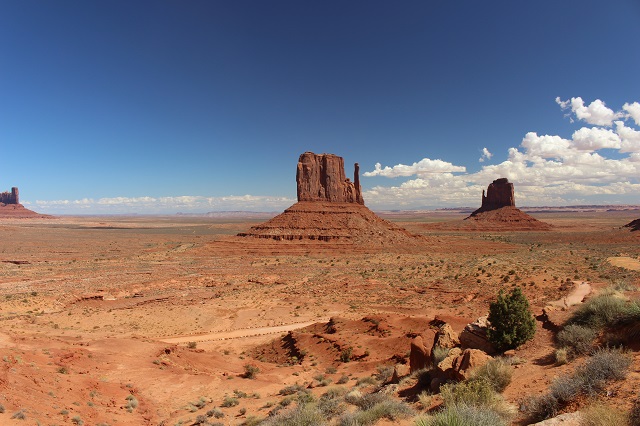
Tip: The America the Beautiful National Parks Pass is not accepted here, as Monument Valley is managed independently by the Navajo Nation (admission fee around $20 per vehicle). We stayed at the Hat Rock Inn in Mexican Hat and had dinner at the legendary Swinging Steak, where USDA steaks are grilled over open mesquite wood fires.
Lake Powell, Horseshoe Bend & Antelope Canyon
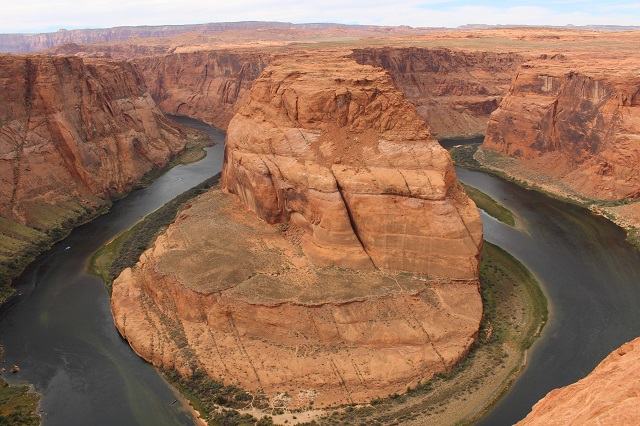
Next stop: Page, Arizona. Because Arizona does not observe Daylight Saving Time, we had to adjust our clocks again upon arrival. Right around midday, a visit to Horseshoe Bend is essential: the sun shines directly down into the 1,000-foot-deep gorge where the emerald Colorado River loops 270 degrees around a red rock amphitheater.
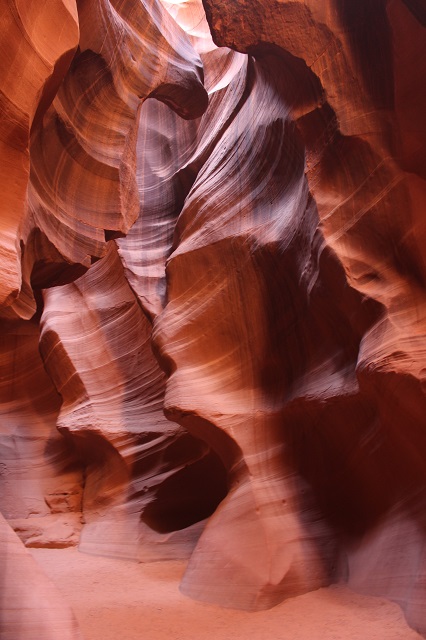
The undeniable highlight of our entire USA roadtrip was Antelope Canyon. Slot canyons are narrow fissures in the earth carved by violent flash floods over millennia. We visited both Upper Antelope Canyon and Lower Antelope Canyon on guided Navajo tours. The sandstone walls glow with radiant shades of orange, magenta, and purple, while midday sunbeams filter through the canyon ceiling like cathedral spotlights.
Grand Canyon National Park
From Page, we crossed the steel Navajo Bridge over the Marble Canyon and entered Grand Canyon National Park via the East Entrance (Desert View). Along Desert View Drive, viewpoints like Lipan Point, Moran Point, and Grandview Point provide staggering scale across the mile-deep chasm.
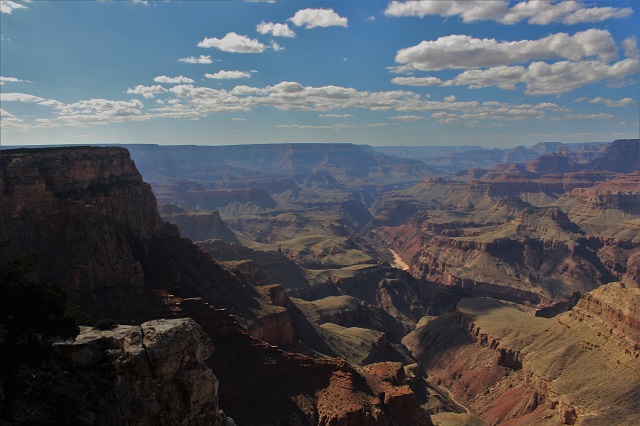
We stayed right inside Grand Canyon Village at the Yavapai Lodge. Early the next morning, we watched the sunrise at Yavapai Point before hiking down the Bright Angel Trail as far as the 1.5-Mile Resthouse. Always remember: going down into the canyon is easy, but climbing back up in the afternoon heat takes twice as long. Bring plenty of water and electrolytes!
Historic Route 66 & Return to Las Vegas
Heading back towards Nevada, we took a detour along the historic Route 66 between Seligman and Kingman. Seligman still preserves quirky retro diners, neon signs, and 1950s Americana charm that inspired the movie Cars.
We spent our final evening in Las Vegas, did some outlet shopping at the Premium Outlets, and toasted to an unforgettable roadtrip through the American Southwest before boarding our flight home.
🎒 Practical Tips & Packing Essentials for a Southwest Roadtrip
Driving through Utah, Arizona, and Nevada is an unforgettable roadtrip adventure. Based on my firsthand experience, here are the essential items you should definitely have in your travel gear:
- America the Beautiful National Parks Pass: If you visit three or more national parks (e.g. Zion, Bryce, Grand Canyon), the $80 annual pass pays for itself immediately and covers one vehicle including all passengers.
- USA Travel Adapter & Power Strip: Roadtrip motels often have very few accessible wall plugs. A compact USA Travel Adapter (Type A/B with USB-C PD Fast Charging) is essential for keeping cameras, phones, and power banks charged every night.
- Hydration Backpack / Water Bladder: The desert air is dry and altitudes in Utah easily exceed 7,000 feet. A lightweight Hiking Hydration Backpack with a 2-liter bladder keeps you hydrated while keeping your hands free for rocky trail scrambles.
- Compression Packing Cubes: When you change motels almost every single evening on a roadtrip, a set of Compression Packing Cubes saves endless time packing and unpacking your suitcase in the trunk.
- UV Sun Protection & Trekking Cap: Don’t underestimate the high-altitude sun in the Southwest – a breathable wide-brim hat, polarized sunglasses, and high-SPF mineral sunscreen are indispensable on every trail.
*Disclosure: The links to recommended travel gear are affiliate links (Amazon PartnerNet). If you order through these links, I may earn a small commission at no additional cost to you. Thank you so much for supporting Michi-Bird!*